


08 Oct How to Prevent & Reduce Burnout in the Workplace
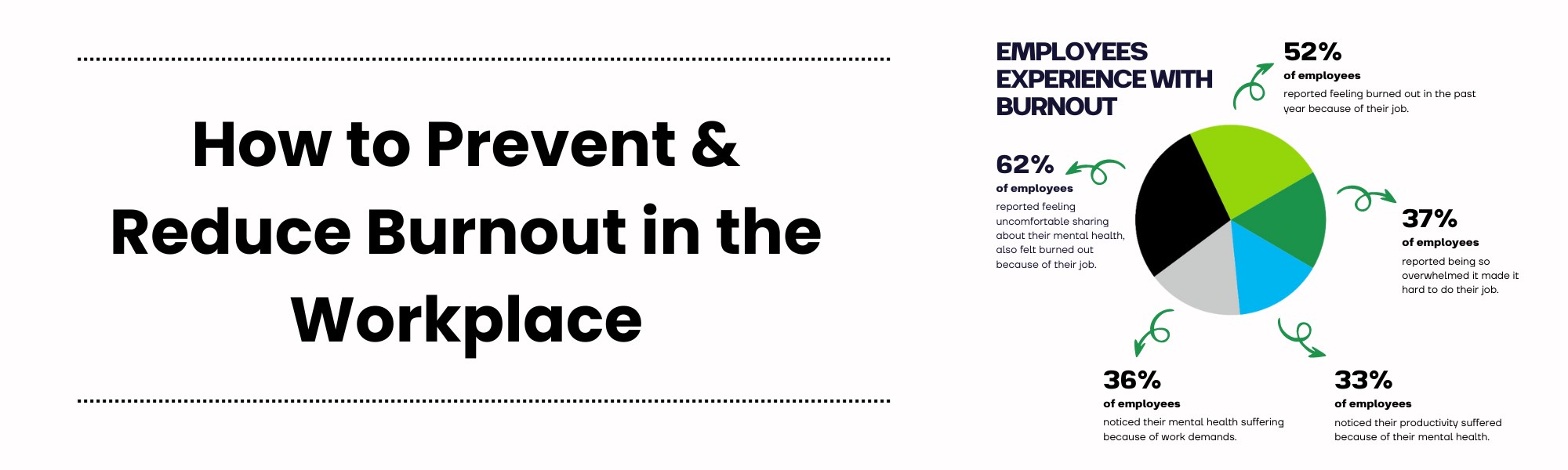
To the people who come in early, find it hard to delegate their tasks, stay late, and even skip lunch, you might be a workaholic.
In last month’s blog, we discussed how mental and physical stressors can manifest and how they are interconnected; a possible contributor could be burnout from work. In honor of National Workaholic Day, we’ll explore practices you can implement to offset burnout.
- Recognize the signs of burnout or stress
Physical signs of stress can present in headaches, tense or sore muscles, upset stomach, and fatigue. Feelings of anxiety, depression, and being unmotivated or overwhelmed could be indicators of burnout. Taking note of the body’s signals will help resolve the issue quicker.
- Develop healthy work-life balance boundaries
The knowledge and implications of maintaining healthy work-life boundaries have proven to strengthen employee engagement and productivity. So, for workaholics who want to do more of what they love, it is important to develop habits that will continue to keep them engaged and motivated in their work.
There should be a start and an end to a work day. Setting strict deadlines that separate work time from personal lifetime is a great start.
- Nourish the body and mind
Physical activity can significantly enhance your mental state as it causes the brain to release serotonin, endorphins, and stress hormones, and vice versa. Nourish the mind by incorporating a meditation practice, which can help reduce stress and anxiety levels.
Burnout is complex and can result from various factors in your life. Allowing this kind of stress to grow and continue can adversely affect job performance and, or mental and physical problems.
Utilize these methods to prevent or cope with burnout; if symptoms persist or worsen, contact a doctor for further guidance.
For a more self-guided plan to manage work-life balance for yourself or your employees, reach out to our team to see about getting started.